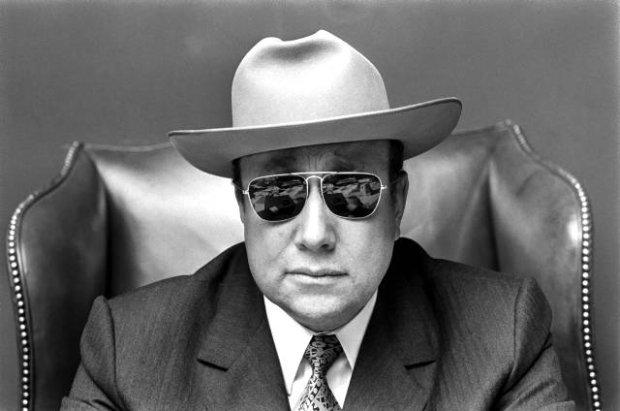
I struggle to think of a director who better embodies the epitome cool & style as much as Jean-Pierre Melville. Known for his 50s and 60s crime films such as Le Samurai, Le Cercle rouge, Le deuxième souffle, and Bob le flambeur, all of which consists of suave men with guns, wearing trenchcoats, smoking cigarettes, drinking cocktails, playing cards or billiards, with Jazz music playing in a club or restaurant. Melville mastered the art of “cool”. He is often referred to as pioneering the French New Wave movement which would go on to change cinema forever.
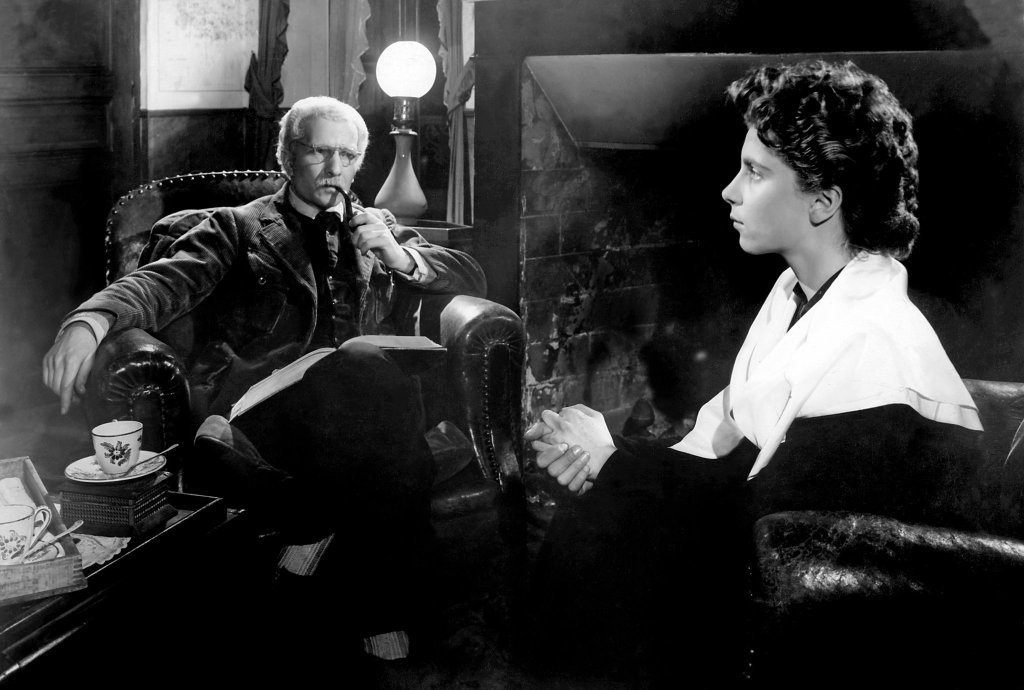
His very first film, however, was anything but cool. There are no card playing men. No jazz music. No shoot outs. No chase scene. Only 3 people In a single room, in the dead of winter, in Nazi occupied France, 1941. Melville’s debut film, Le Silence de la Mar, is a perfect example of hitting the ground running. Despite not having much experience, the young filmmaker somehow displays years of skill and understanding of the craft. Although this historical drama is unlike his later films, it still maintains many of his signature techniques that would flow throughout his filmography.
Le Silence de la Mar, or The Silence of the Sea, primarily takes place in a single room, in which a retired man and his niece are forced to house a Nazi lieutenant by the name of Werner von Ebrennac. As expected, they are not thrilled to have him and refuse to speak to. They barely acknowledge his existence. The lieutenant, however, is very fond of French culture and is very well versed in world art, literature and music. He himself is a composer. He treats his silent homeowners with the upmost respect and compassion, but nevertheless, all he receives in return, is silence.
The film is based on a 1942 novel by Verors (alias for Jean Bruller). Bruller was a member of the French Resistance during World War II. Melville (along with his brother & sister) was also a part of the resistance. He served for two years and even fought in the famous Battle of Monte Cassino. After the war, he immediately set his eyes on filmmaking. Having a bit of trouble getting started, he was forced to make his debut independently.

The crew for Le Silence de la Mar was made up of first timers. Composer Edgar Bischoff got his first taste of film composition and Nicole Stephanie, who plays the niece, received her first acting gig. Another team member was fellow French Resistance member, Henri Decaë. Decaë was not only the film’s cinematographer, but also the editor as well as sound designer. Do you think he contributed enough?
Decaë’s cinematography for this film is one of the more notable characteristics of the film. There are dark shadows and harsh black corners everywhere. The backgrounds are shrouded in darkness, often highlighting the characters’ portraits. It enhances the sense of solitude throughout. Also contributing to the cold, silence of the film is the sound design, or rather, the lack of any sound. While there are occasionally cars, horses and footsteps, the primary sound we hear across the entire movie is a ticking clock. The constant ticking greatly amplifies the silence in the house, creating a sense of dread and loneliness. The talented cinematographer would go on to have a prolific career working with some of the French New Wave’s greatest filmmakers such as Louis Malle and even working on François Truffaut’s The 400 Blows.
This team of amateurs working on Melville’s first feature film brings about a sense of wonder & creativity that is inspiring. Even though Melville is known for his later stylish noir crime thrillers, this World War II drama retains the spirit that flows in all his work. Films like Le Samurai & Le Cercle Rouge are full of moments of silence. Moments of contemplation, of loneliness, all present here.

Also present in Le Silence de la Mar is the technique of combining shots. Directors like Orson Welles & Fritz Lang were already using this method, of having a shot transform into another by moving the camera to focus on something new. It’s not quite a long take, but rather a stitching of shots. Although sometimes it could be both. There is a particular shot near the beginning of the film that silhouettes the niece, then pans up to reveal the Nazi lieutenant’s looming shadow over the room, then pans down to show the old man smoking, still leaving his guest in silence. Melville’s films have many shots such as this one, but it’s incredible to see such work in a low budget production, coming from a first-time director. My personal favorite film of Melville’s is Army of Shadows. It is one of his final films, and it is also a World War II masterpiece. You can see how much he has learned since Silence, but you can also see how much he retained.
French cinema from the 1930s to the 1960s is my favorite Era of cinema. Directors such as Melville, Sacha Guitry, and the unparalleled Jean Renoir are some of my favorite directors of all time. I have watched their work, studied it, became inspired by it, and yet I feel I am not fit to properly interpret or illustrate the concepts, methods and ideas of these brilliant filmmakers. One of my favorite moments in Le Silence de la Mar is when two Nazi soldiers scout the old man’s house and he narrates, “They spoke in what they thought to be French. I couldn’t understand a word”. I feel as though I am those Nazi soldiers. I think I get it, I think I can understand it, but in reality, I am nowhere near it. Much like lieutenant Ebrennac, I want display my appreciation of the French culture, but perhaps I am not where I think I am. Also, much like him, I will continue trying. Until then, I bid you a good night.

 Bloodstained Philosophy
Leave a comment