People are prone to drama. With so many emotions, ideas, conflicts, and coincidences, it is only natural that we all experience misfortunes. Many people choose to avoid drama, living quiet, unintrusive lives. Perhaps these people have experienced loss, betrayal, and heartbreak. Such experiences can cause a person to shut down or shut the world off. One character that comes to mind is Jim Powell, from F. Scott Fitzgerald’s 1922 short story, The Jelly-Bean. Jim was “afraid of girls…He hated his home”. He wasn’t too keen on jumping out of his shell and partying with his friends that invite him to do so. Surprisingly, he is convinced to do so one day. This leads to him falling in love with a beautiful girl at a party. They have fun, they make memories, they plan a future. Then, just when their future was about to begin, she leaves him for another man. Jim goes back into his shell.
The story of Jim Powell is a common one. Countless people around us, if not ourselves, share the same sentiments and outlook as him. It’s a story told so many times through so many mediums. But there is one film that beautifully explores this character archetype and stretches its boarders. That film is La Chienne, directed by Jean Renoir. From human desire, moral callousness, and the struggles of the working class, Renoir’s films touch on many themes that put the human condition under a magnifying glass. With La Chienne, Renoir demonstrates the consequences of naivety, greed, and empathy, or lack thereof. While there are several elements to explore within this classic film, I want to focus on a particular one: The Aspiring Artist.
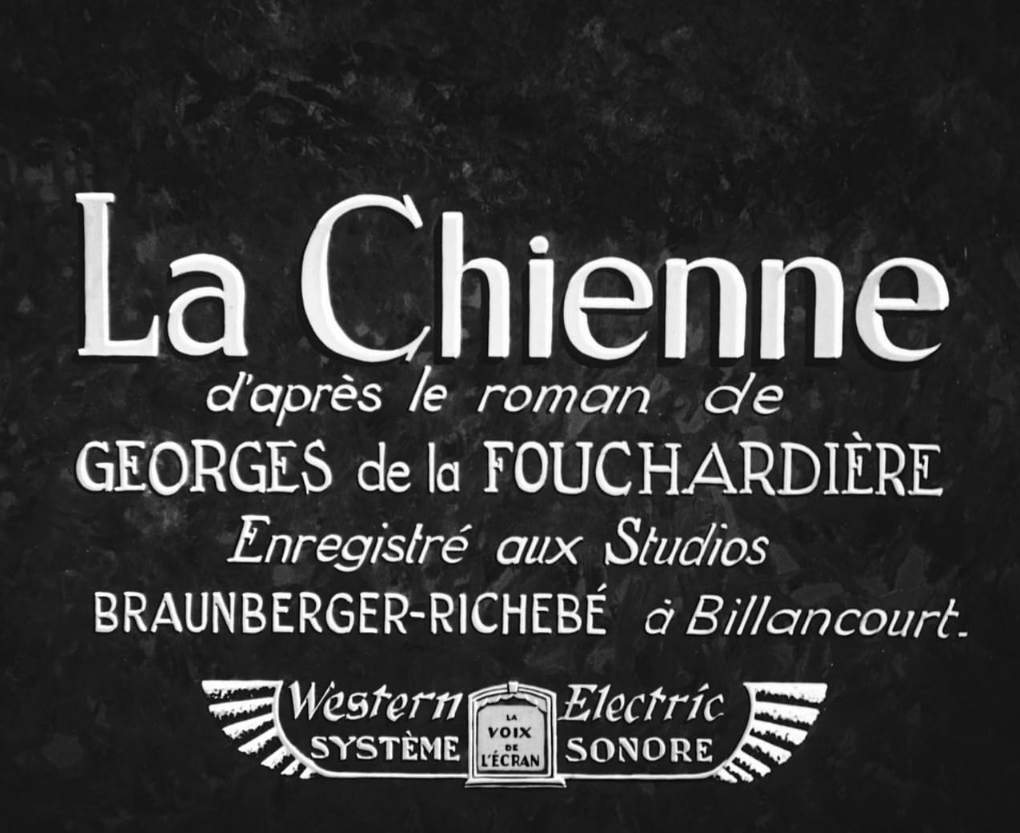
Based on the 1930 novel by Georges de La Fouchardière, Jean Renoir’s La Chienne (The Bitch) was released in 1931. After several silent films, this noir drama was Renoir’s second sound film. The first being On purge bébé, which was made in a record time of 3 weeks, from writing the script to the finished product. On purge bébé was created in such a hurry so Renoir could finance his next film, La Chienne. While the film was written by him, I cannot confirm any deviations he made from the source material, as I must confess, I’ve never read the 1930 novel.
The story of La Chienne centers around 3 characters who are essentially archetypes: The sensitive loner, the Femme fatale, and the evil mastermind (or as the opening of the film declares, “He, She, and the other guy”). We follow Maurice Legrand, a naive, sad, lonely banker who is a painter at heart. Stuck in a one-sided marriage in which his wife constantly berates him, threatens to throw his paintings out, and unfavorably compares him to her previous husband, the fallen war hero, Alexis Godard. While his life is not one he had envisioned for himself, painting keeps his spirits afloat. It helps him escape his pathetic life and dream.
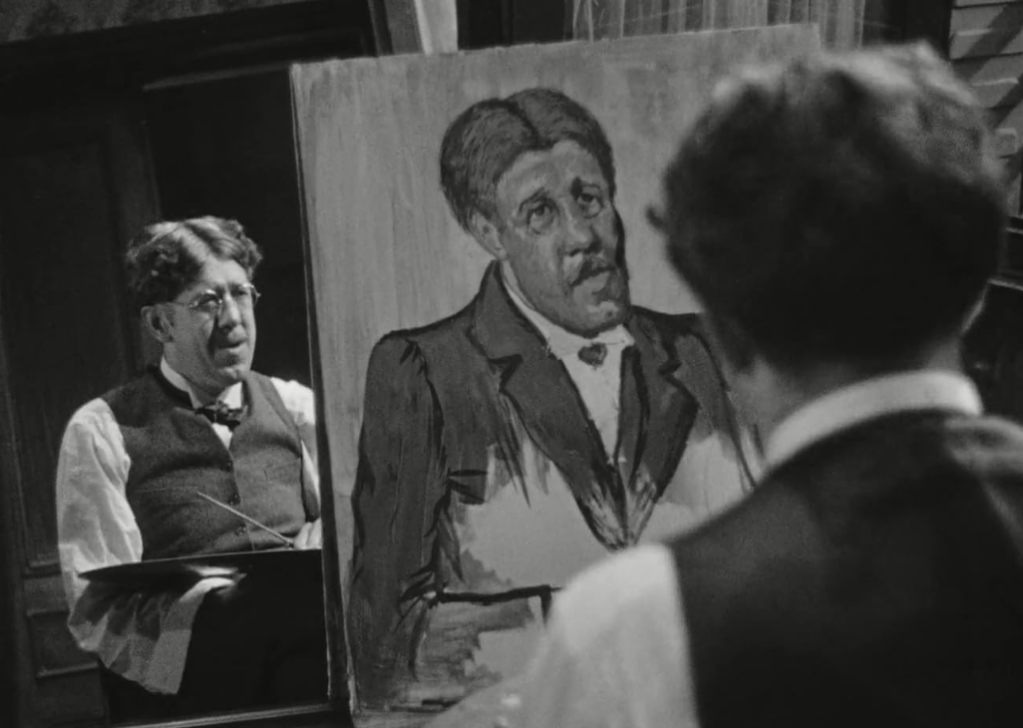
There is a particular scene in which we see the artist painting a self-portrait. He sits back and gazes at it, with his own reflection behind that painted portrait. It is a beautiful shot that illustrates the loneliness within this man. Suddenly, his witch of a wife walks in, stands behind him, shouts at him, and as if he needed the reminder, she declares that “nothing here is yours”, and leaves the room. Maurice continues to paint. Jean Renoir, being the incredible force that he is, does all of this in one shot.
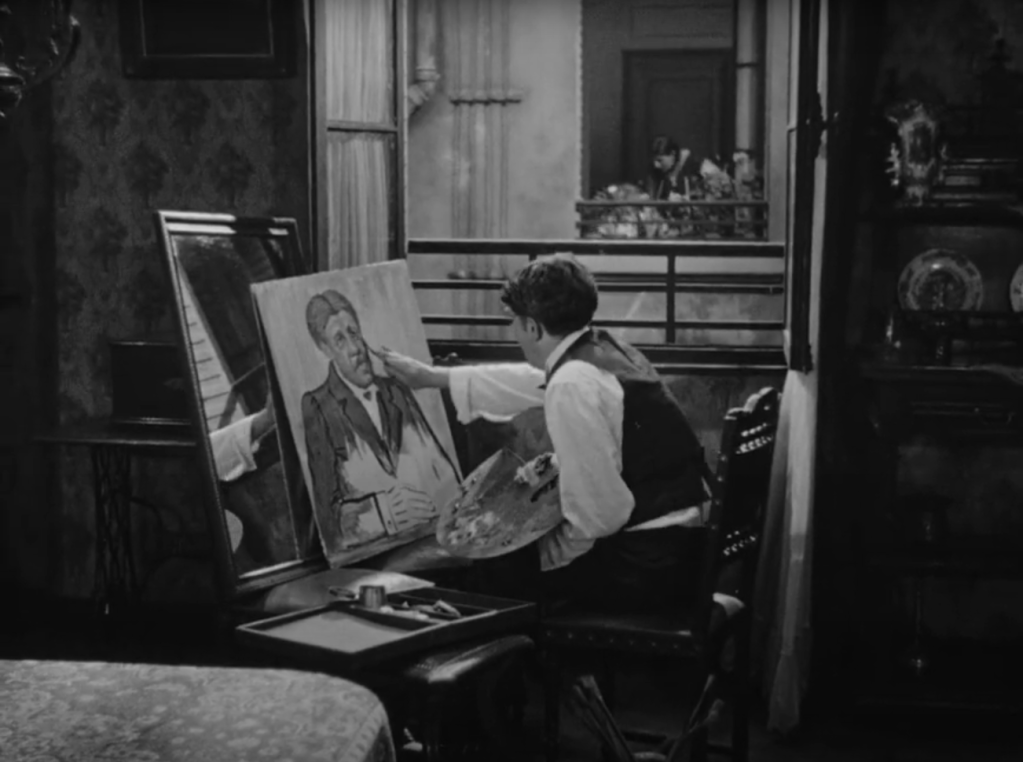
While stuck in his loveless hell, Maurice runs into a woman who is being struck by a drunk man on the street. The naive painter saves her and over time, they become friends, going out and discussing Maurice’s art. Delicate, caring, and beautiful, Lucienne, or Lulu, is the exact opposite of Maurice’s wife. Of course, he eventually falls in love with her. Little does the poor sap realize that the drunk man that was hitting Lulu earlier was in fact her pimp, Dédé. The two of them have been plotting behind the artist’s back, having him paint portraits of Lulu and selling them for large sums of money.
When Maurice visits Lulu to propose to her, he catches her in bed with the vile Dédé. Leaving in silence, with a broken heart, he returns to the spot where he first met the beautiful siren. The next morning, Maurice returns to Lulu, with the intention to still marry her. After offering his protection and love, she humiliates him and crushes the poor man’s soul. Having reached a breaking point, he takes a knife and take’s Lulu’s life. The police arrest Dédé, believing him to be guilty, since he was the one selling the paintings of her portrait. He is sentenced to death.
As I said before, the focus here is on the aspiring artist. There are some parallels between Maurice and Lulu. They are both soft-spoken and naive. He underestimated how evil she could truly be, and she underestimated his limits. Their partners, Maurice’s wife and Dédé, are also similar in that they are both controlling and abusive. All these characters are archetypes we can relate to our everyday lives. There’s a chance you can identify at least one of these characters to someone in your own circle. The character of Maurice, however, is especially interesting in this regard.

Earlier in the film, Maurice tells a friend that he has no interest in living extravagantly and prefers a smaller, more intimate life. This is later echoed by Lulu. The two characters continue to be similar in so many ways and yet her soul is corrupt. She can only bring pain and sorrow. Being the artist he is, Maurice can only find beauty in everything. This is what makes him naive. The introduction of the film has the narrator, portrayed by a puppet, proclaims that Maurice is the “perfect fool”. In the words of the tragic painter, “I lived a life apart. I know nothing of this world. I didn’t know women were such poor wretches… that there’s always some man around to profit by someone’s mistake”.
While I’m sure many people feel trapped or unfortunate, how many are pushed to the point of taking another human’s life? Would Maurice have been so dramatic if his life wasn’t so pathetic? People are heartbroken all the time. People are constantly humiliated. How many of them are pushed to their breaking point? What lead to Maurice to making such a dramatic decision? So much for being a sensitive, shy artist who didn’t want any drama.
Say he did not have such a monstrous wife. Maybe he could have been with someone who didn’t mistreat him so much. It could still be a loveless, unhappy marriage, but one in which he doesn’t constantly get psychologically abused. Would this have helped him from reaching a breaking point? Or what about his social status. During a large, festive dinner scene, Maurice finds himself sitting on the corner of the table and the butt of the jokes. If his friends were nicer, would he have felt so desperate in the end?
He spent his life hiding, staying away from the limelight. Preferring to be in his own home, painting, minding his own business. He had no intentions of bothering anyone. He only wanted to free the artist within and create beauty. Everything up until his violent decision leads us to believe he is a kindhearted, thoughtful character. All it takes is one bad day I suppose.

As if though the film was not tragic enough, the actors of the film were involved in a tragedy of their own. During production of the film, Michel Simon (Maurice) fell in love with the up-and-coming star, Janie Marèse (Lulu). Unfortunately for Simon, Marèse was actually in love with Georges Flamant (Dédé). I believe the expression is “Life imitates art”. Supposedly, Renoir encouraged this relationship so Marèse and Flamant could portray their love as a couple in the film. Ironic, considering Flamant played her abusive pimp on screen.
On August 14, the two lovers went for a drive alongside the French Riviera, with Flamant driving. With his lack of experience driving, Flamant lost control of the car and crashed, killing the 23-year-old Marèse. The film premiered 3 months later, on November 19. A heartbroken Simon confronted Renoir with a gun, claiming this was all his fault. Renoir simply responded, “Kill me if you like, but I have made the film”. Much like the fictional character of Maurice Legrand, Michel Simon seemed to have almost reached a breaking point. However, unlike the quiet and reserved painter, Simon lead a colorful life, having several careers before he even started acting including boxing instructor, magician, clown, and being a member of the Swiss army. Simon clearly had a wealth of experience under his belt.
Still, for real life to imitate the source material so closely is beyond strange. You have infatuation, unrequited love, manipulation, death, and intent of murder. These would certainly be some of the ingredients that could possibly push someone to their breaking point. Pure Drama. Is it best to keep to ourselves, in solitude, living quietly in the shadows? That would definitely decrease your chances of meeting a bitch that could end up destroying your life.
 Bloodstained Philosophy