
Released on August 29, 2024, Emio – The Smiling Man: Famicom Detective Club is Nintendo’s first new, original entry in the visual novel series in 35 years since the second title, The Girl Who Stands Behind, in 1989. There have been remakes and ports since then, but this is the 3rd official story entry, unless you count the 1997 broadcast, BS Tantei Club: Yuki ni Kieta Kako. Like the previous titles, Emio was written, designed, and produced by series creator, Yoshio Sakamoto, now alongside Makoto Asada. Having just completed the game, I wanted to share my initial thoughts on what I believe was a phenomenal game. This is not a review, but an analysis of the concept of dread. -SPOILER FREE-

In 2002. Nintendo released Metroid Fusion, which was, and still is, my favorite story in the Metroid series. Fusion was written and produced by Sakamoto-San. While the game is a sci-fi platformer with elements of body horror, it is essentially a mystery game. Your objective is to get to the bottom of what is going on in the space station. Why are there dead bodies? Who did this?
The atmosphere is intense. There are parasites everywhere as well as an unknown asexual reproducing creature that is after you. Your only support is an AI computer, giving you instructions on what to do and where to go, but not all is as it seems. Things aren’t adding up. Before you know it, the AI has locked you in a room, shutting all doors around you down. The desolation and isolation you feel in Fusion is remarkable. Nintendo followed this up, in 2021, with the next mainline entry in the series, Metroid Dread.
It’s no secret that Sakamoto has always been influenced by his favorite films when working on the Famicom Detective Club or Metroid series. He’s gone on record saying his favorite film, Deep Red, directed by Italian filmmaker, Dario Argento, has greatly influenced the Detective Club series. For Emio, Sakamoto’s gave his co-writer and co-producer, Makoto Asada, several movies to watch, so she could better understand where he was coming from. His understanding of what makes you feel dread is noteworthy. It’s not scary imagery or an abundance of blood and violence. It’s a feeling of helplessness.
While the previous the Famicom Detective Club titles previously explored crime, urban legends, and murder, Emio – The Smiling Man doubles down on the bleakness, exploring the mind of a killer and the aftermath and consequences his actions have not only on society, but children especially. Sakamoto brings his expertise of what makes one feel hopeless to the forefront. The Nintendo veteran explains, “I personally like scary stories, but I don’t like gory depictions of blood splattering about. I find a steady buildup of blood-chilling, unspeakable dread far more interesting. There are scenes where we needed to show blood to fit our intended direction, but I have no intention of making brutality the main focus“.

The first two titles, The Missing Heir and The Girl Who Stands Behind, were amazing mystery visual novels, considering the limitations of the Famicom in the late 80s. They had several memorable characters and moments. The Missing Heir is a classic “Who done it?” mystery that eventually ends on an emotional, somber note. The second installment, The Girl Who Stands Behind, is more complex, with more characters and deeper storylines. While fans seem to favor the second title, I’m in a very small minority that prefers the first one just a bit more.
Emio– The Smiling Man enters the stage and easily became not only my favorite game in the series, but one of my favorite stories in any video game. Oddly enough, even though it’s a lot darker that its predecessors, it’s also funnier. Once again, using his love of cinema, Sakamoto-san and Asada-san were able to create a powerful script, balancing moments of lightheartedness and darkness. There are several school students in this game that signify innocence. The game shows how children can not only be ignorant and naive, but also perceptive and emotional.

One of the prominent themes of the game is how adults should be more aware of a child’s feelings. What greater fear can a child experience than feeling like they have nowhere to go, no one to trust. This concept alone is terrifying. Witnessing a violent crime can be traumatic, but seeing a child feel helpless can give you a sense of dread. Much like Metroid Fusion, the story for Emio focuses on the feeling of not knowing who to trust and feeling alone. However, unlike Fusion, in which you are the one who is trapped and possibly being manipulated, the ones who feel trapped in Emio are the children, not you, the protagonist.
The game has a couple of murders, but they’re not really shown. While it could have helped the player see what happened, not seeing them can let your mind fill in the gaps, which I believe is more terrifying. Sakamoto-San elaborates on this, “That’s not only for ethical reasons, but also because what I’ve been emphasizing in the Famicom Detective Club series is giving players a sense of psychological fear by depicting an event that makes them think it could happen to them. By depicting that fear through careful incorporation of cinematic expressions and choosing the right words, pacing, and music, we managed to develop this game all while maintaining the unique atmosphere of the Famicom Detective Club series“.
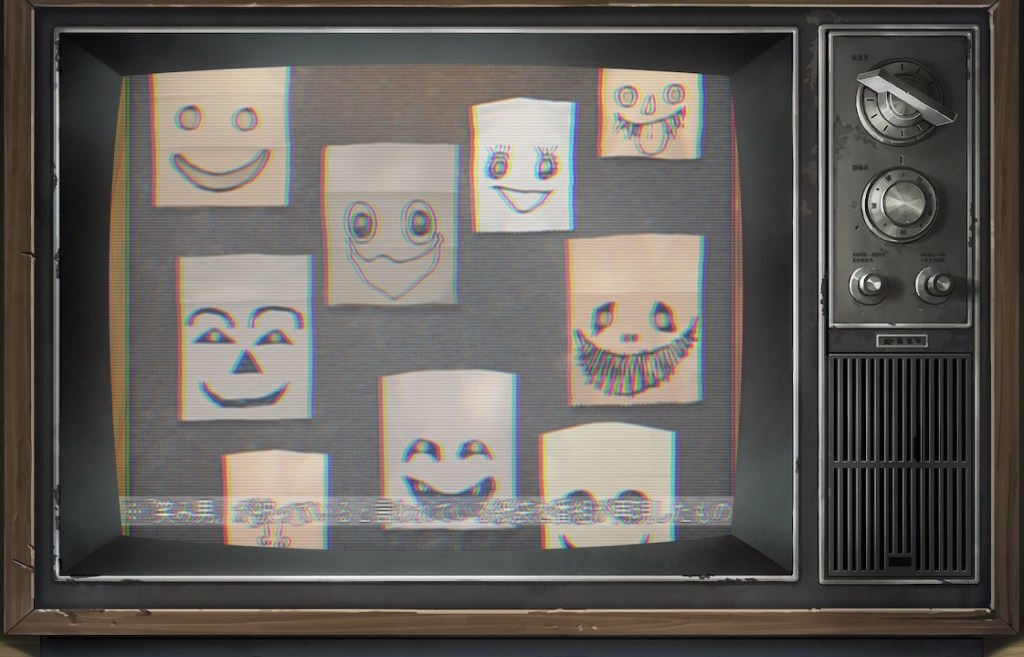
Yoshio Sakamoto and Makoto Asada understood that in order for the player to feel the weight of the schoolgirls’ murders, it would be impactful to talk to the victims’ friends and families to get an idea of how much of a tole the girls’ deaths take on those that cared for them. Of course, the previous two games did this as well, however, I feel it is handled much better in Emio. There is a sense of guilt that many adults in the game feel. This helps convey the sadness and regret people have when someone they know is killed.
One of my all-time favorite games is Lost Judgment, another detective game that deals with bullying and suicide. Throughout that game, the player sees how far bullying can go and how children can feel hopeless and alone. The story does not shy away from such topics and tackles them head on. I feel Emio also tries to explore why certain events take place and what some people could do to help prevent such events.
When I finished Emio – The Smiling Man, I was satisfied. It was a blast to play through, or rather, read through. While the whole game as a whole was well structured and well written, it was particularly the final, secret chapter that really reached my core. I won’t say much about it, other than it was one of the best things I’ve experienced in a while. It was everything I wanted and more. It is why I am here writing about the game.
I was reminded of a time I recommended a friend of mine to watch one of my favorite films, Suspiria (2018), which ironically is a remake of another Dario Argento film. It is a brutal, dark film with such heavy emotions and a political backdrop. When my friend was finished with it, she told me she loved it and described it as beautiful. She understood how masterfully crafted the film was, being able to see the beauty within, despite its painfully heartbreaking story and horrific imagery. This is exactly how I felt during the finale of Emio. Please play the game yourself to discover the true ending of the game.

The game has an abundance of characters that make for a memorable journey. There were a couple scenes that made me laugh but the one that had me laughing the most was when the protagonist was competing against a teacher on who knows Ayumi better. They are pathetically bragging on who has a stronger connection to her. The music, the dialogue, the delivery, it just got me. Another funny moment was when you realize that all the shops are starting to give “Smiling Man” discounts, showing not only a funny idea, but also how business and media can take advantage of horrific crimes for profit.
Many characters in the story go out of their way to show support for the victims and detectives. This emphasizes how some people can be empathetic and caring, while others can make a situation worse by missing signals, ignoring a situation, or even just igniting the problems. The game does its best to show all the different angles. More importantly, it wants the player to focus on the sadness a child can feel. Compassion is necessary in everyday life, but it’s children that need it the most. As Makoto Asada stated, “It would be great if those who play the game become a little kinder to the people who are always close to them”.

Quotes taken from Nintendo’s Ask the Developer Interview.
 Bloodstained Philosophy