
The soundtrack for Streets of Rage (1991) is often considered to be innovative and groundbreaking for game music. A year later, Streets of Rage 2 would further push the limits of game music and establish itself as one of the greatest soundtracks in gaming. These first two games had beautiful melodies and catchy rhythms that could get players to feel the groove, with its blend of House, Techno, Dance, and Jazz, among other styles. Then in 1994, Streets of Rage 3 was released, and its soundtrack was widely looked down upon, with reviewers and gamers often citing the music as low point in the game. Even to this day, many still dislike this soundtrack. Gone were the melodies and fun rhythms of the first two titles. Now it was time to go in a completely different direction. A direction that alienated many fans. No more House, no more Jazz. Now it was time for Rotterdam Techno and Gabber.

“I think the public still has a lot of misconceptions about what techno is.” – Yuzo Koshiro, 1994
Yuzo Koshiro was the primary composer for the Streets of Rage trilogy, with Motohiro Kawashima contributing to Streets of Rage 2 and 3. Both of them created some revolutionary pieces that really showed what game music is capable of. I grew up playing the first two games a lot and I would often burn the songs onto CDs and play them in the car when my parents would take me out to an arcade or movie theater. I still love those original two soundtracks; they deserve all the acclaim they get. While they are universally revered, I personally love the music for Streets of Rage 3 (or Bare Knuckle III, as it’s known in Japan). It’s actually my favorite soundtrack of the trilogy.
For the first game, the stage 1 theme, Fighting in the Street, is an instant classic. You can hear the influence of many electronic acts that were starting to rise during the late 80s and early 90s, one of them being Technotronic. It’s obvious to hear the similarities to songs like Pump the Jam, Come On, and Come Back. Moon Beach is such a beautiful song and is one of my favorite songs from the 16-bit era, let alone from the original two games. Its Latin flavored rhythm, bassline and melodies give the song a tropical feel, while the electronic beat and synthesizers help mix the song with an underground club sound. The boss theme, Attack The Barbarian is a heavy hitting tune that gets you ready for a brawl, or a good time at the club.
Streets of Rage 2’s music is so celebrated and regarded as a masterpiece, if you aren’t familiar with it, please go check out the entire soundtrack. Hell, just go play the game. Grab a buddy and start beating some ass. Standout tracks like Go Straight, In The Bar, Dreamer, and Under Logic are good examples of what this soundtrack is capable of. It’s a product of its time, and I mean that in the best way possible. Koshiro took what the underground electronic scene was doing and masterfully incorporated it into a video game. In a time where game music was usually uplifting adventure music or whimsical chiptune melodies, Streets of Rage showed everyone that you can fuse genres and create something beautiful.
Koshiro was a fan of going to clubs. This experience helped him understand the basic as well as the intricacies of the underground scene. The music for the first two Streets of Rage titles capture what it was like to go to a club playing Detroit House and Techno. To think, you could play a video game in 1992 and hear songs that sounded like Scrot’s Der Amokläufer, The X’s Secret Wish, and Terrence Parker’s It’s Time To Make A Change. One of the many inspirations for Streets of Rage was Soul II Soul, particularly their song Keep on Movin’. which has a piano and strings that are echoed in Koshiro’s Main Theme for Streets of Rage 4.
Now the stage is set. The first two Streets of Rage games were widely loved for both their gameplay and their music. The anticipation is high. What will Yuzo Koshiro and Motohiro Kawashima do for the next entry? To the dismay of most fans, they would drop the sounds of the first games and take players from and underground club in Detroit to an underground club in Rotterdam, Netherlands. Dropping the House and Jazz flavors of the first games, Koshiro and Kawashima decided that for the 3rd game, they would introduce players to, what is still to this day not widely acceptable by general audiences, Gabber and Hardcore.

“One thing we wanted to explore was, to what extent can we incorporate Rotterdam Techno (“gabber”) into game music.” – Motohiro Kawashima, 1994
While Streets of Rage 1 and 2 opened up with the somber but smooth tracks, The Street of Rage and S.O.R Super Mix, Streets of Rage 3 would open with an aggressively off-putting track Beat Ambience, that would set the tone of the game. Instead of fighting thugs on the streets, this bleak third entry had robots, computers, and the threat of nuclear war. Its soundtrack would capture these elements perfectly. Full of dissonance, breaking all the harmony that was found the previous two games, Streets of Rage 3 was not afraid to go full Hardcore.
The opening stage theme, Fuze, immediately gives you a sense of urgency and dread and is easily one of my favorite songs in the game. One of the sounds in the track emulates the classic Roland Synthesizer, TB-303, which was used in a variety of underground electronic scenes. Some people call the sound “Acid“. This synthesizer played such an integral part of the club experience that some sub-genres were named after the iconic sound, such as Acid House and Acid Trance, This, along with Roland’s drum machine TR-606, would dominate the underground scene of the late 80 to the late 90s. The song Cycle 1 also makes use of the “Acid” sound.
Most of the soundtrack for Streets of Rage 3 sounds as if though it was made by a machine and not a human being, which isn’t too far from the truth. Koshiro created a program that randomly generated sequences that he would later modify. This resulted in very repetitive music that lacked any obvious melodies and structure. In an interview for Hippon Super magazine in 1994, Kawashima mentions, “Modern classical music is less about listening for simple enjoyment, but rather asks you to contemplate why a certain sound is there in the first place. There might be a really interesting idea hidden beneath an ugly or dissonant sound and exploring that is part of the appeal. Its basis is not in traditional harmony, but in taking the sounds around you as they are and exploring the intricacies and nuances there.”
The Boss theme continues the dissonance and chaos while Bulldozer gives us full on Gabber. Bulldozer is so fun to hear, and I love dissecting it and trying to hear all the different elements working together. Its sound design is amazing for an early 90s game. Now, let’s talk about Hardcore Techno, Gabber, and the underground scene.
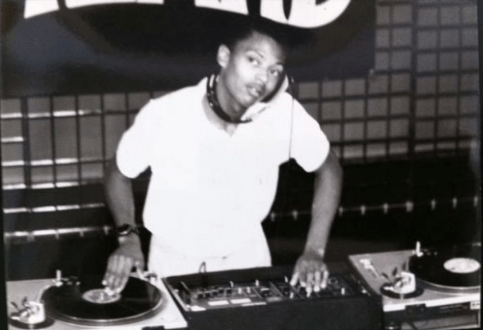
Originating from Amsterdam and Rotterdam, Gabber is basically techno on crack, or more appropriately, on acid. It’s fast, aggressive, distorted, and repetitive. The snares are harsh, the synthesizers are razor sharp, and the kicks can make your heart bounce. For general examples of early Gabber, listen to Leviathan’s Wrong Decision, Technosis’ Energize, and Dj Sim’s Loud As Fuck. Hardcore Techno and Gabber were intertwining during this period, since they were both different, more violent offshoots of Techno. During the development of Streets of Rage 3, artists like Jeff Mills were making the rounds in the Detroit scene. Jeff was a prominent figure in the development of Techno. With songs like Berlin, Workers, and Confidentials, you can start to see where Koshiro and Kawashima were coming from for Streets of Rage 3. Jeff’s songs sound as if though they were part of the Streets of Rage 3 soundtrack, with songs such as Growth (Axis). Other artists during the period such as Holy Noise and MAGNET004 and countless others offer an idea of what the club scene was like for Gabber and Techno-Heads.
With of all this in mind, listen to Koshiro’s Crazy Train and then listen to Shinji Hosoe’s Rotterdam Nation for Ridge Racer (1993). You’ll start to notice how a specific scene was developing in the game music scene in Japan. Things were starting to shift. The early Ridge Racer games really focused on the Rotterdam sound thanks for Shinji Hosoe and Ayako Saso. Rhythm Shift and Lords of Techno also display the influence Europe’s underground scene was having on game composers. Eventually, Konami would release the Beatmania series, and this is where the floodgates would completely burst open for all underground electronic genres to shine through game music. Artists like L.E.D. would lead the charge for Gabber with songs like HELL SCAPER, THE DEEP STRIKER, and later the explosive DOMINION, that just pushes everything to its limits and breaks everything.
Another song I love from Streets of Rage 3 is Cycle II. It’s less Gabber and more Hardcore Techno. Its hard bass kicks and bright high hats make for a good club hit. This awesome track is followed by what is my favorite song in the entire game, Inga Rasen. If you listen to Inga Rasen and then songs like L.E.D.’s EXTREME MACH COLLIDER, Rintaro Soma‘s Rumble Rave, REMO-CON‘S Smalt and Atavism, or TORIENA‘s Red Cell, it’s obvious to see how Koshiro and Kawashima foreshadowed what was to come. This particular form of Techno is a favorite of mine. It’s not as cool and collected and Techno, but also not as hyper and loud as Gabber. It’s just Hardcore Techno. The fact that songs like Cycle II and Inga Rasen sound as good as they do, considering the limitations and time period, blows my mind.

Of course, what we’ve been discussing here about the music of Streets of Rage 3 is miles away from what originally found in the first two games. It’s no wonder people often disregard the Soundtrack for this third game as just “noise”. There is too much dissonance and not enough melodies or variation. It’s not music made for a general audience. These underground electronic styles were, however, a huge influence on several game composers. The Streets of Rage games were just some of the first games to thoroughly explore these genres.
If we go back to Technotronic, check out one of my favorite songs, Voices. With its dark and heavy sound, beautifully placed samples, and moments of levity, this track is simply amazing. From an artist that was primarily House and Dance, this Industrial song would probably not sit well with fans of their lighter, earlier work. Now check out Kenichiro Fukui’s Street, from the underrated game Einhänder. Again, this would never fly with general audiences, but I’m glad it’s there, lurking in the shadows.
Another time an underground sound made its way to the surface was in SEGA’s Team Sonic Racing (2019). The theme of the game, Green Light Ride, composed by Jun Senoue, was remixed by Wall5 (Heigo Tani), who is known for his cold, static Techno sound. This remix, much like the music for Streets of Rage 3, was received by widespread negative reactions. While the original song is a hard rock song, this remix gave Sonic fans a taste of modern day Gabber.
Surprisingly enough, Nintendo has also dabbled in Hardcore. In the 2009 racing game, Excitebots, there is a song for the China stage that shows us that Gabber and hardcore can make appearances where you least expect them. Even the Italian plumber has played with some “Acid” in Super Mario Party (2018) with songs like Croozin’ for a Broozin and Languid Cold Sweat using the classic Roland TB-303 sound as a bassline or as a lead synth in the case of In Great Fear.
The soundtrack for Streets of Rage 3 is not a favorite for many people, but for me, it’s a part of my roots. It’s basically in my veins. It introduced people to a scene they probably didn’t know existed and also helped pave the way for future musicians, myself included. Whether it’s from a technical standpoint or a historical one, Yuzo Koshiro and Motohiro Kawashima’s work on these games have a place in history.
Streets of Rage – Official Vinyl Soundtrack
Streets of Rage 2 – Official Vinyl Soundtrack
Streets of Rage 3 – Official Vinyl Soundtrack
 Bloodstained Philosophy