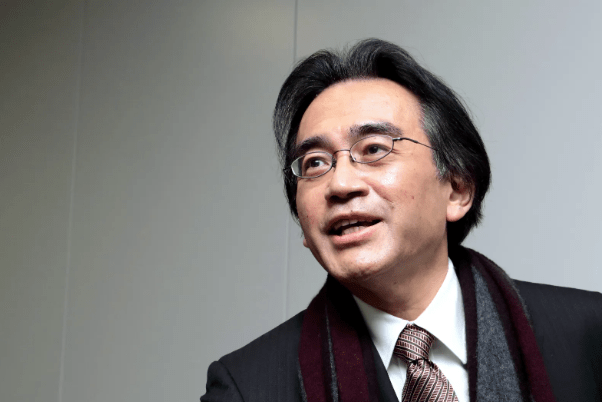
Satoru Iwata consistently demonstrated kindness, patience, and leadership all throughout his life. Not only that, but he also had a sensational sense of humor. Even many years after his passing in 2015, I still discover new things about him. From the multitude of games he worked on to his overall demeanor and character, I owe a lot to Iwata.
Satoru Iwata craved to create video games early in his life. As a young student in middle school, he was already experimenting with computers to create his own games. At the age of 14, he purchased a programmable calculator and by age 15, he was already programming his own games for his classmates to play. At 18, he acquired a Commodore PET and famously dismantled it in an attempt to understand the technology. Shortly after, he attended the Tokyo Institute of Technology, where he majored in Computer Science. Throughout this time, he also served as class president and student council president, while also serving as president for numerous clubs. This man was born to become a leader in the game industry.

In 1980, he joined HAL Laboratory and in 1983 he became their coordinator of software production. This allowed him to reach out to Nintendo to create a collaborative relationship. During this time, he worked as a programmer on several titles such as Pinball, Golf, and Balloon Fight (all of which are available to play on the Switch as part of the NES collection, if you have a Nintendo Switch Online subscription). During his time at HAL, Iwata hired Masahiro Sakurai, which was the start of a special bond. A true creator and artist in his own right, Sakurai is a force to be reckoned with.
In 1990 Nintendo contacted several companies to develop Open Tournament Golf but they all declined the project as they believed the sheer size of the data required could not be stored within an NES cartridge. Iwata took this opportunity to accept the project no one thought was possible and put his coding skills on full force. Because the game had so many options, levels, and graphics, Iwata had to create his own his own data compression method to fit it all in. For this game, he was credited as Chief Programmer. The end result was a fun, addicting game that was later used as inspiration for Wii Sports Golf in 2006.
One of Iwata’s greatest strengths was the ability to look at the larger picture. Whether it was the scope of a project, a company struggle, or someone else’s personal struggle, he was great at analyzing all the options. Using reason and experience, Iwata always demonstrated great leadership. “This is just a personal opinion, but isn’t the ultimate goal of all living things to propagate the species? If we want to propagate the species, each of us needs to make a point of why we do this one thing better than anybody else. In other words, an ability to assert ‘I am better at this skill than other people’ is in the DNA all around us. Those without that kind of strength have gradually disappeared from the gene pool. Hence all living things have an innate ability to assert their unique abilities. At an organization like a company, everyone is prone to view their own strength favorably against the weakness of others“.
To further prove this point of astonishing leadership, he was said to have managed using logic, rather than intuition. This is probably what allowed him to see all the angles and possibilities. “Decision-making means gathering and analyzing information and managing priorities, and that as you discover your priorities, you should see where they take you as you work through your decisions“.
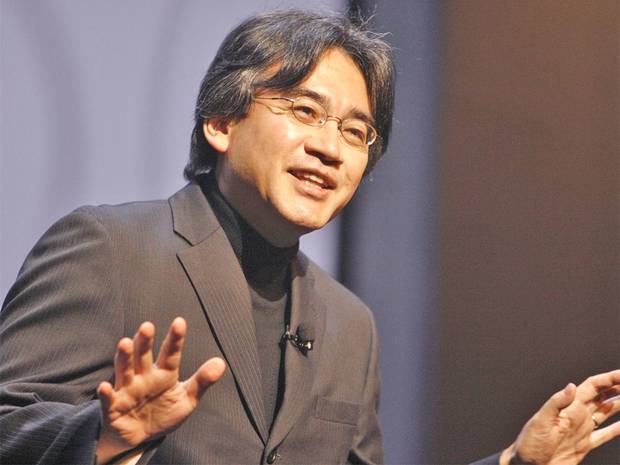
While Iwata would go on to work on various notable titles including Earthbound, Kirby, and Super Smash Bros., he would eventually become the president of Nintendo in 2002. He started his presidency by establishing the philosophy that Nintendo should not focus on creating stronger hardware to compete with competitors but rather focus on software. The goal was to put emphasis on game quality and structure instead of advanced graphics. He also created a more collaborative environment within Nintendo, allowing more people to pitch ideas and have more of a voice in the company. This was something he also did during his years at HAL Laboratory. The number of contributions he had as President is far too many to list here. From his involvement in the development of the highly successful Nintendo Wii to the even more successful Nintendo DS, he certainly helped change the landscape of games.
In 2006, Iwata started the interview series, Iwata Asks, which had a profound impact on my life. In this series, Iwata would ask developers about their newest game. Unlike many game industry interviews, which were more obvious or formulaic, Iwata would ask more specific questions and provide a lot of transparency (read as he and producer Takao Shimizu are very honest about how working with Miyamoto is not always easy in the Super Mario Galaxy interview). From the moment he dismantled his computer back in 1978, It was apparent that Iwata was a curious man and wanted to continue learning. These interviews proved he never stopped being an inquisitive person. I drew a lot of inspiration from these interviews, whether it was about business, game development, or even just how to create a friendly, but honest, work environment. I often go back to these and still learn a lot.
In 2011, he started the now famous, Nintendo Direct, an online press conference that would reveal all the upcoming games on a Nintendo console. Iwata would host these, announcing each game and giving some insight to them. His presence would create a warm and inviting feel that would make each announcement exciting. Sometimes, he would star in small skits making these video presentations more fun and memorable. Eventually, other game companies such as Konami and Capcom would follow with their own “Directs”. While Nintendo Direct is still going on today, it is definitely missing the welcoming voice and energy of the great Iwata.
In Metroid Prime 3; Corruption, when you enter a secret code, you can hear Iwata deliver a message: “Hello, this is Iwata from Nintendo. A president has to take things really seriously, even if it doesn’t seem like it. It’s understandable if you lose weight from stress…but I get fatter instead. Nobody thinks I’m taking it seriously“. Moments like this one, or his akward encounter with Miyamoto, are why I love him. One of the more iconic moments was in 2011, during a difficult period in which Nintendo was experiencing low sales. Iwata took it upon himself to cut his own salary in half in order to make sure there were no layoffs within the company. He did this again in 2014.
In 2012, Iwata appeared on one of my favorite shows, Gamecenter CX, where he continued to demonstrate all of his inspiring attributes. His kindness is obvious, but his leadership is also on display. As always, he gives audiences insight into game development, while also making us laugh. I would say this episode is my personal favorite moment of his. I watch this whenever I miss him. I highly urge you to watch the whole segment. Below is a small excerpt from the episode.
Iwata gained his wisdom by not jumping to conclusions and seeing different perspectives. His passion for collecting data and information is what made him a respectable leader. “When I was little, I was sick a lot and had asthma, and after I switched schools, I was bullied for a while. Through these experiences, I saw the world through the eyes of the weak. But seeing the world through the eyes of the weak was an incredibly valuable experience for me. Even after becoming president of Nintendo, which was far from a weak position, I could never lose sight of my earlier experiences, nor do I look back on those hard times and feel any resentment whatsoever“.
Masahiro Sakurai had a YouTube series that focused on various aspects game development. At the time of this writing, it ended one month ago, with one of the final episodes being a tribute to the late president. It provides a more intimate look at the work ethics and kindness of Iwata, while also giving us a glimpse of how close these two were.
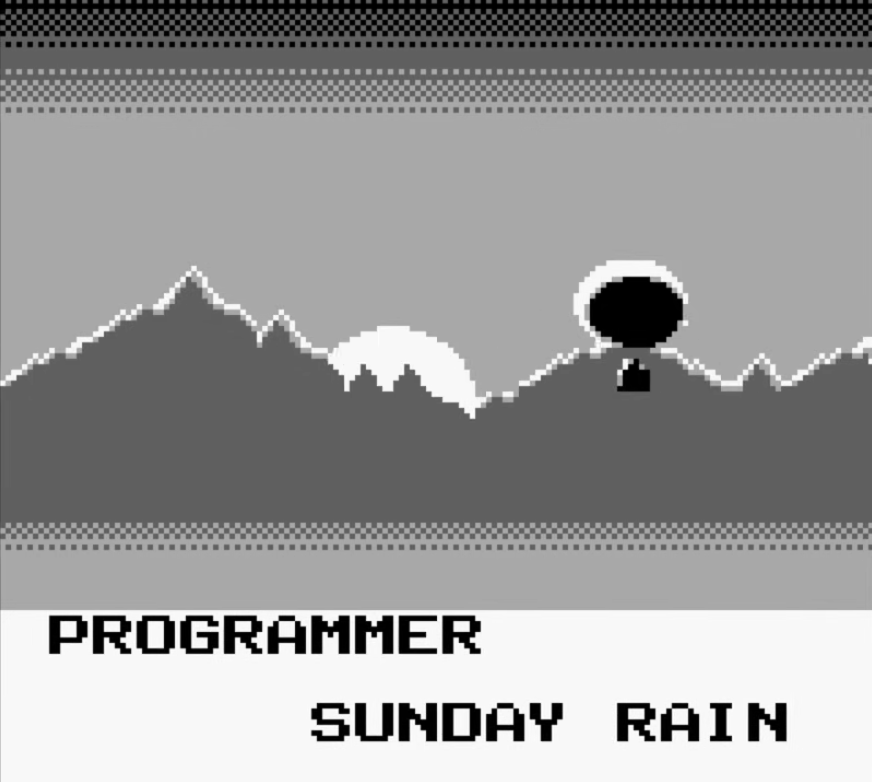
For the very first Kirby game in 1992, Kirby’s Dream Land, Iwata served as a programmer. For this title, he was credited as Sunday Rain. This alias has a sense of not only beauty and calmness, but also melancholia. I’m unclear as to why he chose that name, or if he even chose it. But what is clear is that he not only loved playing video games, but he also loved making them. He loved making fans happy and made sure they had fun. He also appreciated and respected his fellow team members. His ability to always keep calm, create a welcoming environment, and display strong leadership and passion is what drives me to aim higher. As he continues to inspire me, I want to wish Satoru Iwata a very happy birthday. Thank you for everything.
Quotes taken from Ask Iwata
 Bloodstained Philosophy