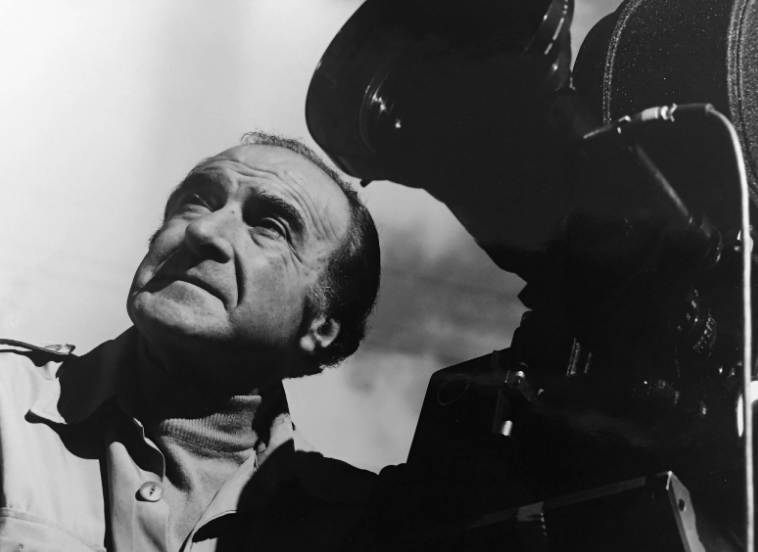
Born on November 4, 1908, Stanley Cortez is an often-overlooked cinematographer who has worked with some prolific names such as Fritz Lang, John Huston, David O. Selznick, Samuel Fuller, Charles Laughton, and Orson Welles. He also worked with Julien Duvivier, a filmmaker not as well-known as the others but is one of my personal favorites. With his expertise of spatial awareness, he often delivered beautiful, haunting imagery. Refraining from using too many, as he put it, “gimmicks” such as zoom lenses, Cortez was a believer in simplicity. Visual storytelling was his not only his craft, but also his passion.


Staney started his career as a photographer and set designer for several studios in New York. This experience helped him develop his spatial senses and understanding of how a camera could move through a set with actors. Many of the early films Cortez worked on were dark and psychological. This allowed him to create striking shots that almost seemed like moving paintings. They are photographed in such a way that is sometimes terrifying, yet mesmerizing. While his work in the 1930s on films such as The Last Express, Exposed, and The Black Doll were not bad, there wasn’t much in them to make Cortez stand out as the masterful photographer he would eventually become. It was in the 1940s through 1960s where I believe he thrived.
Cortez often played with the backgrounds and their relation to the subject in the foreground. This made the films appear more hyper-real, adding to the foreboding atmosphere. Hard contrasted shadows were also a prominent component of his imagery. While the actors were properly well lit, there were often looming shadows behind them. The shadows coming off the buildings and windows also helped make the sets feel mysterious and sinister.
Many of the films Cortez worked on contained his signature style. The backgrounds, the lighting, the facial expressions, and body language were all part of the formula. He took everything into account and found answers hidden in corners most didn’t know existed. Because Cortez understood the importance of simplicity and exposing his mind to various forms of art, the visuals he created became works of art. Sometimes they look like a painting with the characters moving in it, other times a photograph in which the camera is moving around in. Whether it’s letting us see the whole space or letting us be in a room through an odd angle with dim lighting, his experience in set design helped him understand to take the entire room into account.


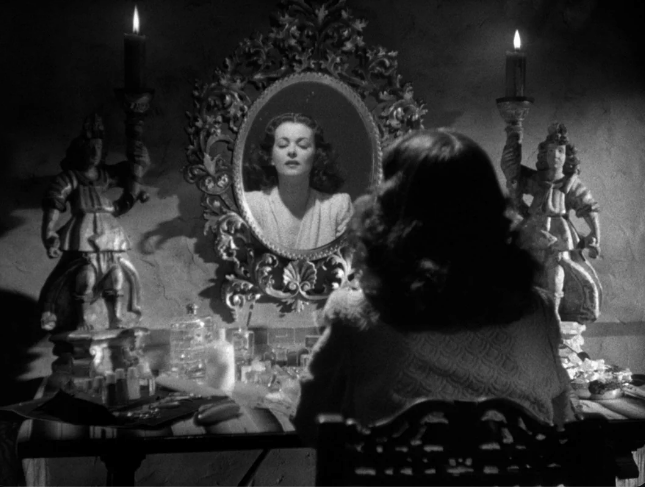
Films like The Three Faces of Eve and The Naked Kiss dealt with controversial subject matters, considered to be taboo. Based on the 1957 book of the same name, Three Faces of Eve focuses on a woman struggling with dissociative identity disorder. The book was written by two psychiatrists, Corbett H. Thigpen and Hervey M. Cleckley, who also helped write the screenplay. Because the film portrays the intense difficulties of living with this condition, this allowed Cortez to create a dreamlike feel for certain sequences, when the protagonist falls back into her suppressed memories. The movie is full of wide shots, showing large spaces and rooms, creating a feeling of isolation and somehow also entrapment.
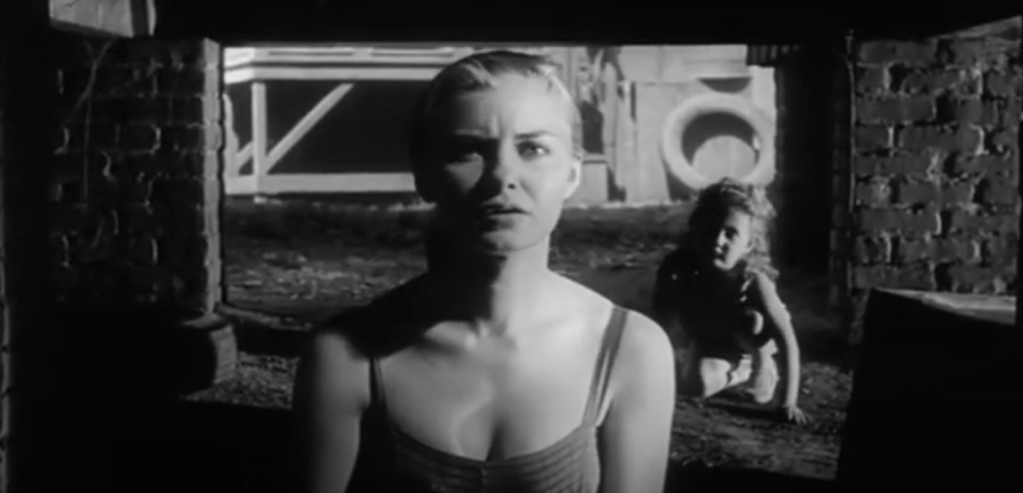
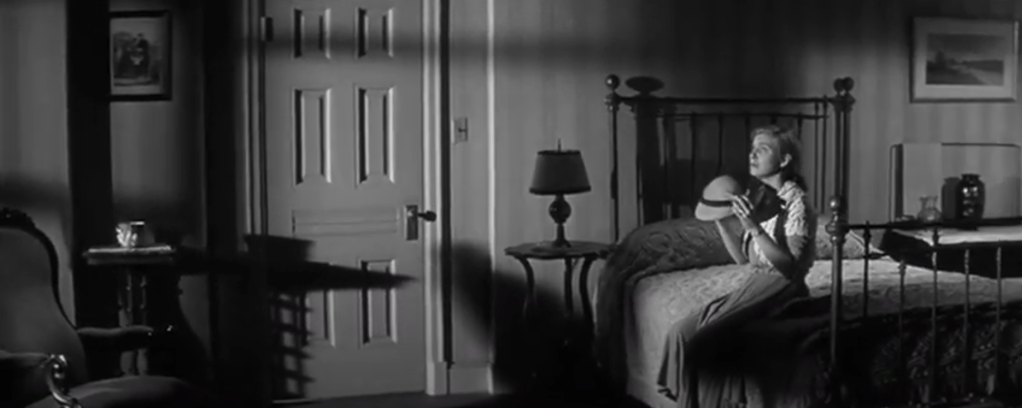
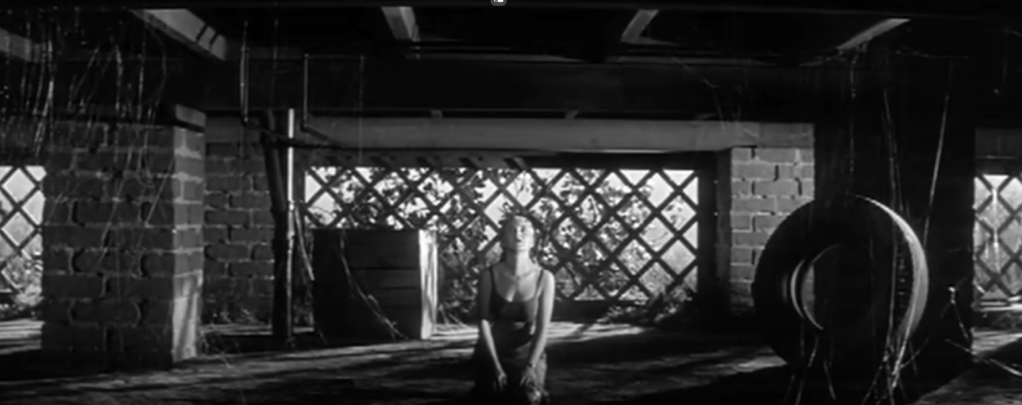
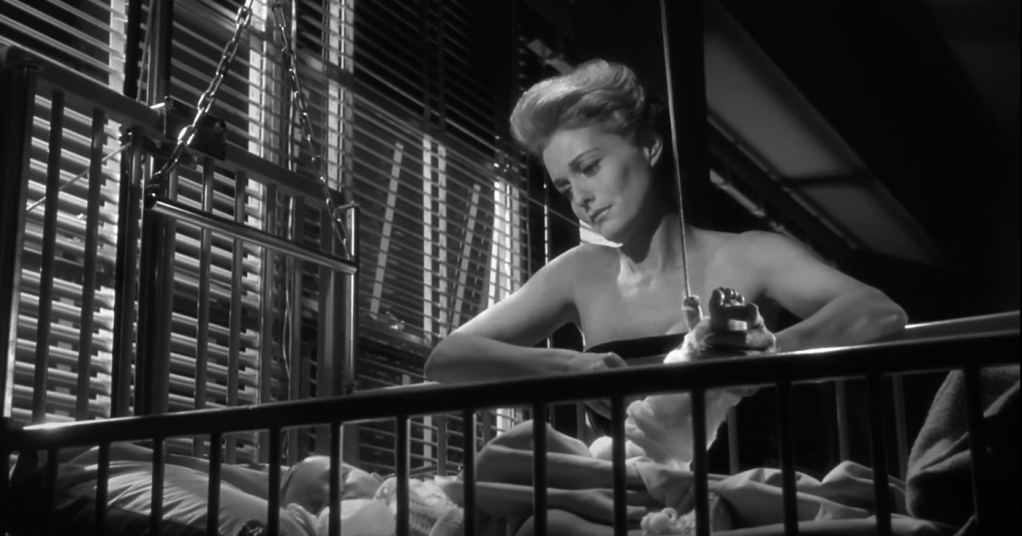
The Naked Kiss, directed by Samuel Fuller, follows an ex-prostitute that changes her ways and finds herself working as a nurse in a hospital for disabled children. She meets a man and eventually agrees to marry him. Unfortunately, before the wedding, she walks in on him committing a heinous crime and kills him. Once again, these unconventional themes allow Cortez to create beautifully haunting images. The shot near the end of the film, where the protagonist is in the jail cell, is one of the most remarkable shots I’ve ever seen in a film. The lighting and shadows, along with Constance Towers’ look of sorrow, is powerful. We are not on the same side of the bars as her. She is far removed from society. The shot itself is nothing grand or impossible. It’s the simplicity of it that is beautiful.


In October of 1974, Cortez spoke at the AFI Conservatory, giving us an insight as to where he draws inspiration from: “For some people, perhaps, everything that they have experienced in their lives comes to a focal point, and from that point, ideas build upon ideas. I will always spend a great deal of time in museums, studying various paintings. I’ll study certain musical compositions because they give me something. I’ll go to New York and spend two days in the Metropolitan, or at the Louvre in Paris, or in Florence or Rome and God knows where else, because I’ll tell you, it all ties into being exposed to what’s happening in the world, so that we, as a creative group, can reflect, in terms of cinematic images, on what the hell this is all about“.
This simple, but effective, form of inspiration is exactly why Cortez’s cinematography is so rich. He can approach a scene with the mindset of a sculptor, a painter, or a composer. The way he shoots certain shots are not only dynamic and strong, but they are also simple. Compared to many of his contemporaries, who would often shoot in flat lighting and with flat camerawork, Stanely would create evocative shots that had feeling and weight. It was clear that that he had a proper comprehension of what the focus should be, while also reminding us that the backgrounds are just as important.
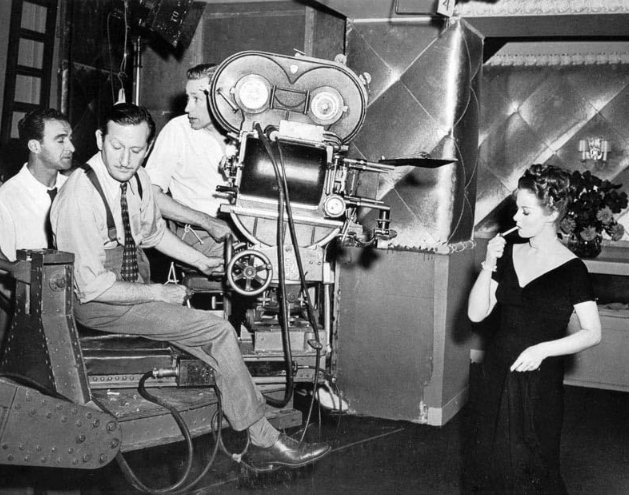
I first ran across the work of Stanely Cortez when I saw Orson Welles‘ The Magnificent Ambersons, which immediately entranced me. Never had I seen anything like it before. I was already an Orson Welles fan (as he continues to be in my top 3 favorite filmmakers of all time) but I was curious as to who the cinematographer was. Welles is already known as a magisterial director. Often shooting long takes, as though his actors are part of a stage production and playing with experimental angles, he certainly knew how to make a movie feel alive. However, his brilliant directing, paired with the masterful Stanely Cortez, made for what I consider to be one of my favorite films ever made.
Based on the 1918 novel by Booth Tarkington, The Magnificent Ambersons carries a tragic tale with an ending that left nobody happy. Of course, I am talking about the making of the film itself, not the plot. This 1942 drama, which feels more like a play than a movie, is famous for the butchering it endured when the producers kicked Welles out of the editing room and cut an hours’ worth of film out and changed the ending to be more optimistic. The removed footage was destroyed and the composer, none other than the legendary Bernard Herman, requested that his name be taken off the credits. The film that survived is already a masterpiece in terms of technicality and craftmanship, but I can only dream of what it was actually supposed to be.
Despise this depressing story, The Magnificent Ambersons absolutely delivers in terms of visuals. Not only is Welles’ famous camerawork and long takes in full force, but Stanely Cortez’s beautiful cinematography adds such luxuriant depth. Almost every single frame of this film is immaculate. The sets are grand in scale, allowing Cortez to full explore the environments and backgrounds. The lighting is dramatic, with the rooms and faces being half lit most of the time. I can’t praise this film enough. It is one of my favorites and it continues to inspire me.
The Night of the Hunter, directed by Charles Laughton, is another remarkable work of art. Much like Ambersons, it is visually layered. So many memorable shots throughout that evoke something out of you. The cinematography is simple, but the lighting and set design contribute so much, that some shots become moving paintings. For a 1982 interview for American Cinematographer, Cortez said “When a cinematographer says a certain picture is close to this heart, it’s because of the fun he had doing it and, in this case, the tremendous sympatico — not a phony veneer, but truly a sympatico — that existed between Charles Laughton and myself. Notwithstanding the others who contribute so much to a production, on the firing line, when all the chips are down, there are two people involved: the director and the cinematographer.”
It should go without saying that I recommend any of the films mentioned above. I barely even scratched the surface of what Cortez’s career entails. My goal was to highlight his ability to express such rich imagery and depth while remaining simple. He has created countless shots that will transcend time and inspire the creation of more art. Just as he went to museums or listened to compositions to gain inspiration, I can watch the films he’s worked on and gain inspiration for work I create. Hopefully you have a starting point that can lead you to unexplored territory.
I will leave you with his closing remarks during his AFI speech, “So go into a museum, talk to a beggar on the street, go to the Sistine Chapel and see how the forced perspective was designed. Go anywhere, but look, see, hear, feel. Let me just finish by saying that I believe that with maturity as a creative artist comes simplicity. The most difficult thing in the world is to be simple. And the enthusiasm must always be there, of course. Otherwise, you’re dead.”

 Bloodstained Philosophy